
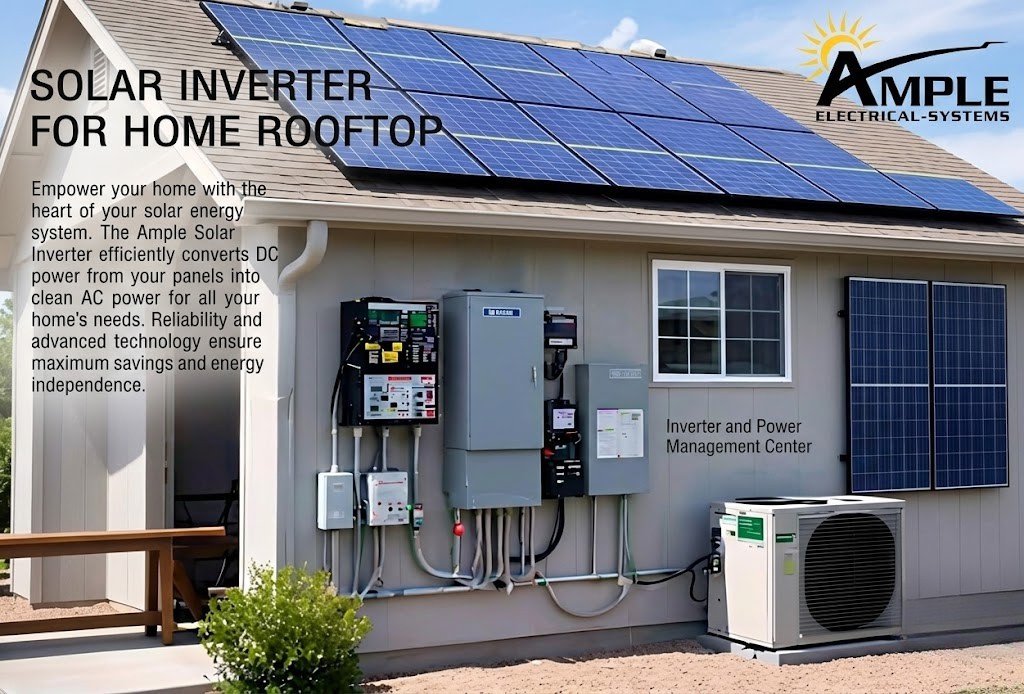
Solar Inverter for Home Rooftop
ampleelectricals As more homeowners switch to solar energy, selecting the right solar inverter for home rooftop systems has become a crucial decision. A solar inverter is the central component of a solar power system that converts the electricity generated by solar panels into usable power for your home.
The performance, efficiency, and reliability of your solar system largely depend on the quality of the inverter you choose. Whether you are installing a new rooftop solar system or upgrading an existing setup, understanding solar inverter technology can help you maximize energy production and reduce electricity costs.
With advancements in solar technology, modern inverters now offer smart monitoring, enhanced safety features, higher efficiency, and seamless integration with battery storage systems. Choosing the right inverter ensures long-term savings and an uninterrupted power supply.
Key Features
- Converts DC power into AC power
- Improves solar system efficiency
- Supports real-time performance monitoring
- Compatible with residential rooftop solar systems
- Advanced safety and protection features
- Supports net metering functionality
- Long operational lifespan
- Low maintenance requirements
- Battery backup compatibility in hybrid systems
- Smart mobile app integration
Table of Contents
| Sr. No. | Topics |
|---|---|
| 1 | What is a Solar Inverter? |
| 2 | Importance of Solar Inverters in Rooftop Systems |
| 3 | Types of Solar Inverters |
| 4 | Benefits of Solar Inverters |
| 5 | How to Choose the Best Solar Inverter |
| 6 | Solar Inverter Installation Process |
| 7 | Solar Inverter Cost Guide |
| 8 | Maintenance and Care Tips |
| 9 | Frequently Asked Questions |
| 10 | Conclusion |
What is a Solar Inverter?
A solar inverter is an electronic device that converts the Direct Current (DC) electricity produced by solar panels into Alternating Current (AC) electricity used by household appliances. Since most home appliances operate on AC power, the inverter plays an essential role in making solar energy usable.
Without a solar inverter, the electricity generated by solar panels cannot be utilized effectively in residential applications.
Importance of Solar Inverters in Rooftop Systems
The solar inverter acts as the brain of a rooftop solar system. It manages power conversion, monitors system performance, and ensures safe electricity distribution throughout the property.
A high-quality inverter helps homeowners:
- Maximize solar energy utilization
- Reduce electricity bills
- Improve system efficiency
- Monitor power generation
- Enhance overall system reliability
Types of Solar Inverters
On-Grid Solar Inverter
On-grid solar inverters are connected directly to the electricity grid. They allow excess solar energy to be exported to the grid through net metering, helping homeowners earn credits and reduce utility bills.
Off-Grid Solar Inverter
Off-grid inverters are designed for locations without grid access. These systems require battery storage to supply electricity during nighttime or cloudy weather.
Hybrid Solar Inverter
Hybrid solar inverters combine the benefits of on-grid and off-grid systems. They can store excess energy in batteries while remaining connected to the utility grid.
Micro Inverter
Micro inverters are installed on individual solar panels rather than the entire system. They improve performance in areas with shading issues and optimize power generation from each panel.
Benefits of Solar Inverters
Higher Energy Efficiency
Modern solar inverters provide excellent conversion efficiency, ensuring maximum utilization of solar energy.
Reduced Electricity Bills
Efficient energy conversion allows homeowners to generate more usable electricity, reducing dependence on grid power.
Smart Monitoring Features
Many advanced inverters come with Wi-Fi connectivity and mobile applications that allow users to monitor performance in real time.
Enhanced Safety
Solar inverters include built-in protection against voltage fluctuations, overheating, overloads, and electrical faults.
Increased System Reliability
Quality inverters help maintain consistent system performance and extend the lifespan of the entire solar setup.
How to Choose the Best Solar Inverter
Evaluate Your Energy Requirements
Calculate your household electricity consumption before selecting an inverter.
Match Inverter Capacity with Solar Panels
The inverter capacity should be compatible with your rooftop solar system size.
Check Conversion Efficiency
Look for inverters with efficiency ratings above 95% for optimal performance.
Consider Warranty Coverage
Choose products with comprehensive warranties and reliable after-sales support.
Look for Smart Features
Remote monitoring, performance analytics, and mobile connectivity can significantly improve user experience.
Select a Trusted Brand
Purchasing from reputable manufacturers ensures product quality, service support, and long-term reliability.
Solar Inverter Installation Process
Site Inspection
Professionals assess your rooftop, solar panels, and electrical setup.
System Planning
The inverter is selected based on energy requirements and solar panel capacity.
Electrical Connections
The inverter is connected to solar panels, safety devices, and household electrical systems.
Testing and Configuration
Technicians test the inverter to ensure proper operation and safety compliance.
Final Commissioning
Once verified, the system is activated and begins generating electricity.
Solar Inverter Cost Guide
| Inverter Type | Ideal For | Approximate Price Range |
| On-Grid Inverter | Residential Homes | ?20,000 – ?1,00,000 |
| Off-Grid Inverter | Remote Areas | ?30,000 – ?1,50,000 |
| Hybrid Inverter | Backup Power Solutions | ?50,000 – ?2,50,000 |
| Micro Inverter | Premium Rooftop Systems | ?8,000 – ?20,000 Per Panel |
Prices may vary depending on brand, capacity, technology, and installation requirements.
Maintenance and Care Tips
Keep the Inverter Clean
Regular cleaning prevents dust accumulation and improves cooling efficiency.
Ensure Proper Ventilation
Install the inverter in a well-ventilated area to avoid overheating.
Monitor Performance Regularly
Use monitoring tools to track system performance and identify issues early.
Schedule Annual Inspections
Professional maintenance can improve efficiency and extend inverter lifespan.
Check Electrical Connections
Periodic inspection of cables and connections ensures safe and reliable operation.
Frequently Asked Questions
What is the best solar inverter for home rooftop systems?
The best inverter depends on your energy requirements. On-grid inverters are ideal for reducing electricity bills, while hybrid inverters are suitable for homes requiring battery backup.
How much does a solar inverter cost?
Solar inverter prices generally range from ?20,000 to ?2,50,000 depending on the inverter type, capacity, and features.
How long does a solar inverter last?
Most solar inverters have an average lifespan of 10 to 15 years, while premium models may last even longer with proper maintenance.
Can solar inverters work during power cuts?
Standard on-grid inverters shut down during power outages. Hybrid and off-grid systems with batteries can continue supplying electricity.
Do solar inverters require maintenance?
Solar inverters require minimal maintenance, but regular inspections and cleaning are recommended for optimal performance.
What size solar inverter do I need?
The required inverter size depends on your solar panel capacity and household electricity consumption.
Are solar inverters safe?
Yes. Modern solar inverters include advanced safety features such as surge protection, overload protection, and temperature monitoring.
Can I monitor my solar inverter using a mobile phone?
Many modern solar inverters offer Wi-Fi connectivity and dedicated mobile applications for remote monitoring.
Which inverter is better: Hybrid or On-Grid?
If you need backup power during outages, a hybrid inverter is the better choice. For maximum savings and net metering benefits, an on-grid inverter is ideal.
Is a warranty available on solar inverters?
Most manufacturers provide warranties ranging from 5 to 12 years, with options for extended coverage.
Conclusion
A solar inverter is one of the most important components of a rooftop solar system. It directly impacts the efficiency, reliability, and overall performance of your solar installation. By understanding different inverter types, comparing features, and selecting a trusted brand, homeowners can maximize solar energy production and achieve substantial long-term savings.
Investing in the right solar inverter for your home rooftop system ensures better energy management, lower electricity bills, and a cleaner, more sustainable future.
check this :- https://www.indiamart.com/

A Solar Water Pump System is an energy-efficient solution that uses solar power to pump water for agricultural, residential, and commercial applications. It provides a reliable water supply without depending on grid electricity or diesel fuel. Designed for long-term performance, these systems require minimal maintenance and offer a cost-effective, eco-friendly solution for irrigation and water management.
Read more