
Solar Panel Installation: A Complete Guide to Clean and Cost-Effective Energy
Table of Contents
- Introduction to Solar Panel Installation
- Key Features of Solar Panel Installation
- What is Solar Panel Installation?
- Benefits of Installing Solar Panels
- Types of Solar Panel Installation Systems
- Step-by-Step Installation Process
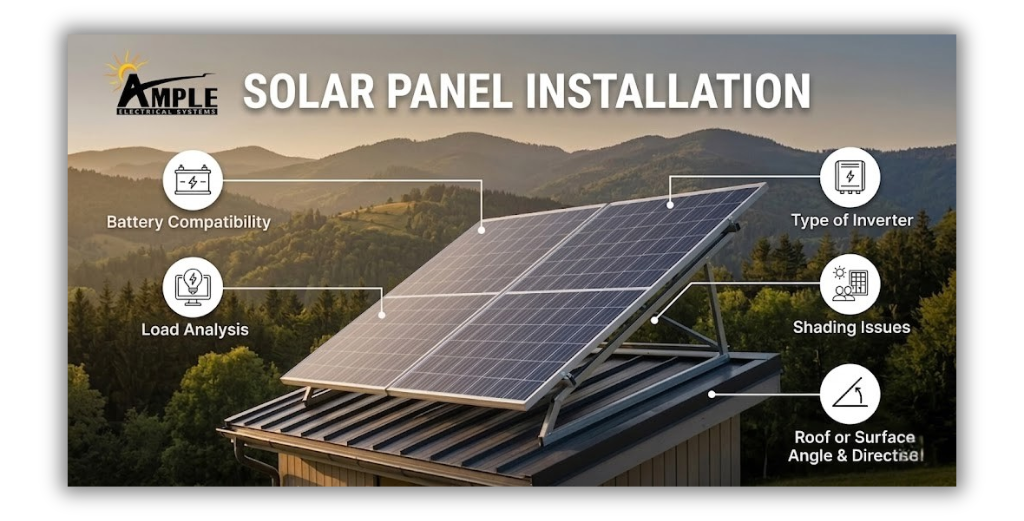
- Factors to Consider Before Installation
- Maintenance and Performance Tips
- Cost and Long-Term Savings
- Frequently Asked Questions
- Conclusion
Introduction
As energy prices continue to rise, more homeowners, businesses, and industries are investing in solar energy solutions. Solar panel installation allows properties to generate electricity directly from sunlight, helping reduce dependence on traditional power sources and lowering long-term energy expenses.
ampleelectricals Modern solar technology has become more efficient, reliable, and accessible than ever before. Whether installed on residential rooftops, commercial buildings, or industrial facilities, solar systems provide a practical way to achieve greater energy efficiency while contributing to environmental sustainability.
Key Features
| Feature | Description |
|---|---|
| Renewable Energy Source | Generates electricity from sunlight |
| Reduced Electricity Bills | Helps lower monthly energy costs |
| Long Service Life | Operates efficiently for 25+ years |
| Low Maintenance | Requires minimal upkeep |
| Environment Friendly | Produces clean energy |
| Flexible Applications | Suitable for homes, offices, and industries |
| Energy Independence | Reduces reliance on utility power |
What is Solar Panel Installation?
Solar panel installation is the process of setting up a solar energy system that converts sunlight into usable electricity. The system typically includes solar panels, inverters, mounting structures, wiring, and monitoring equipment.
Once installed, the system generates power that can be used to operate electrical appliances, equipment, lighting systems, and other energy-consuming devices.
Benefits of Installing Solar Panels
Lower Energy Costs
Generating electricity on-site can significantly reduce monthly electricity bills and operational expenses.
Sustainable Energy Solution
Solar power is a renewable energy source that helps reduce environmental impact and supports clean energy goals.
Long-Term Financial Value
A solar system can continue generating electricity for decades, providing substantial long-term savings.
Increased Property Appeal
Energy-efficient properties are often viewed as more attractive by buyers and investors.
Reduced Carbon Footprint
Using solar energy helps decrease dependence on fossil-fuel-based electricity generation.
Types of Solar Panel Installation Systems
On-Grid System
This setup is connected to the utility grid and allows users to draw power when needed while exporting excess electricity where permitted.
Off-Grid System
An off-grid system operates independently and uses battery storage for electricity availability during non-sunlight hours.
Hybrid System
Hybrid systems combine battery storage with grid connectivity, providing enhanced flexibility and reliability.
Step-by-Step Installation Process
Site Assessment
Professionals evaluate the property, sunlight availability, roof condition, and energy requirements.
System Design
A customized design is prepared based on available space and expected energy consumption.
Equipment Selection
Appropriate solar panels, inverters, and mounting structures are selected for the project.
Installation and Wiring
Solar panels are mounted securely, and electrical connections are completed according to safety standards.
Testing and Commissioning
The system is tested thoroughly before being activated for regular use.
Factors to Consider Before Installation
| Factor | Importance |
| Energy Consumption | Determines the required system size |
| Available Roof Space | Influences the installation capacity |
| Sunlight Exposure | Affects energy generation |
| Panel Efficiency | Impacts overall performance |
| Budget | Helps determine system configuration |
Considering these factors before installation helps ensure optimal system performance and return on investment.
Maintenance and Performance Tips
To maintain efficiency and reliability:
Clean solar panels regularly.
Monitor energy production through available software.
Inspect electrical connections periodically.
Check inverter performance.
Schedule annual professional maintenance inspections.
Regular maintenance helps maximize energy generation and extend system lifespan.
Cost and Long-Term Savings
The cost of solar panel installation depends on factors such as system size, equipment quality, installation complexity, and location.
Although there is an initial investment, many users benefit from long-term electricity savings, reduced operating costs, and improved energy efficiency over the system's lifetime.
Frequently Asked Questions
How long does solar panel installation take?
Most installations can be completed within a few days, depending on system size and project requirements.
How long do solar panels last?
High-quality solar panels typically have a lifespan of 25 years or more.
Do solar panels work during cloudy weather?
Yes, they continue generating electricity, although output may be lower than on sunny days.
Is maintenance expensive?
No. Solar systems generally require minimal maintenance and low operating costs.
Can solar panels increase property value?
Many buyers consider energy-efficient properties more attractive, which may positively influence property value.
Conclusion
Solar panel installation is a practical investment for anyone seeking long-term energy savings and environmental benefits. With reliable performance, low maintenance requirements, and the ability to generate clean electricity, solar systems have become a preferred energy solution for residential, commercial, and industrial applications. Proper planning, quality equipment, and professional installation can help maximize efficiency and deliver lasting value for years to come.

A Solar Water Pump System is an energy-efficient solution that uses solar power to pump water for agricultural, residential, and commercial applications. It provides a reliable water supply without depending on grid electricity or diesel fuel. Designed for long-term performance, these systems require minimal maintenance and offer a cost-effective, eco-friendly solution for irrigation and water management.
Read more