
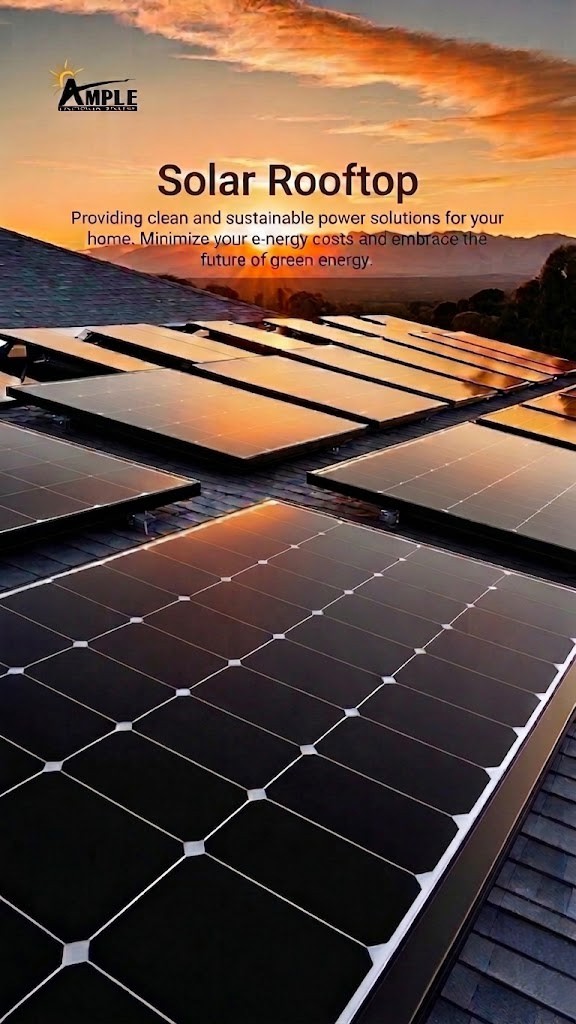
Solar Rooftop System: A Smart Way to Generate Clean Energy
Table of Contents
- Introduction to Solar Rooftop Systems
- Key Features of Solar Rooftop Solutions
- What is a Solar Rooftop System?
- How Does a Solar Rooftop System Work?
- Types of Solar Rooftop Systems
- Benefits of Installing a Solar Rooftop System
- Space and Installation Requirements
- Cost Factors and Savings Potential
- Maintenance and Performance Monitoring
- Frequently Asked Questions
- Conclusion
Introduction
The growing demand for clean and cost-effective energy has increased the popularity of solar rooftop systems across residential, commercial, and industrial sectors. These systems utilize available rooftop space to generate electricity from sunlight, helping property owners reduce dependence on conventional power sources.
ampleelectrical A rooftop solar installation is not only an environmentally responsible choice but also a practical investment that can provide long-term savings. With advancements in solar technology and increasing awareness of sustainable energy solutions, rooftop systems have become a preferred option for many consumers.
Key Features
| Feature | Description |
|---|---|
| Renewable Energy Source | Generates electricity using sunlight |
| Lower Energy Costs | Helps reduce monthly electricity bills |
| Long Service Life | Operates efficiently for over 25 years |
| Low Maintenance | Requires minimal upkeep |
| Environment Friendly | Supports cleaner energy production |
| Scalable Design | Suitable for homes, offices, and industries |
| Grid Integration | Compatible with on-grid and hybrid systems |
What is a Solar Rooftop System?
A solar rooftop system is an energy generation setup installed on the roof of a building. It consists of solar panels, inverters, mounting structures, electrical wiring, and monitoring equipment.
The system captures sunlight and converts it into electricity that can be used to power appliances, machinery, lighting systems, and other electrical loads.
How Does a Solar Rooftop System Work?
The working process involves several stages:
- Solar panels absorb sunlight.
- Photovoltaic cells generate direct current (DC) electricity.
- Inverters convert DC into alternating current (AC).
- The generated power is supplied to the building’s electrical system.
- Excess energy may be exported to the utility grid, depending on the system configuration.
Types of Solar Rooftop Systems
On-Grid Solar Rooftop System
This system is connected to the utility grid and allows users to utilize solar energy while drawing power from the grid when needed.
Off-Grid Solar Rooftop System
Off-grid systems operate independently and use battery storage to provide electricity when sunlight is unavailable.
Hybrid Solar Rooftop System
Hybrid systems combine grid connectivity and battery storage, offering greater flexibility and energy reliability.
Benefits of Installing a Solar Rooftop System
Reduced Electricity Expenses
Generating electricity on-site can help lower energy costs significantly over time.
Sustainable Energy Generation
Solar energy is renewable and helps reduce environmental impact.
Better Use of Available Space
Unused rooftop areas can be converted into productive energy-generating assets.
Long-Term Financial Benefits
A well-designed system can provide energy savings for many years.
Increased Energy Independence
Property owners can reduce their reliance on conventional power sources and fluctuating electricity prices.
Space and Installation Requirements
The required rooftop area depends on system size, panel efficiency, and installation design. For optimal performance, the roof should receive adequate sunlight and remain free from significant shading throughout the day.
Professional site assessments help determine the most suitable system configuration for a specific property.
Cost Factors and Savings Potential
Several factors affect the overall project investment:
| Cost Factor | Influence |
| System Capacity | Larger systems require more equipment |
| Solar Module Quality | Impacts efficiency and lifespan |
| Inverter Selection | Affects overall system performance |
| Roof Structure | Influences installation complexity |
| Monitoring Features | Enhances operational visibility |
Although installation requires an initial investment, long-term electricity savings often make rooftop solar an attractive option.
Maintenance and Performance Monitoring
Solar rooftop systems require limited maintenance. Key activities include:
Cleaning solar panels periodically
Monitoring energy production
Inspecting electrical connections
Checking inverter performance
Scheduling preventive maintenance inspections
Regular maintenance helps maximize efficiency and system lifespan.
Frequently Asked Questions
How long does a solar rooftop system last?
Most systems can operate effectively for 25 years or more with proper maintenance.
Can rooftop solar work during cloudy weather?
Yes, solar panels continue to generate electricity during cloudy conditions, although output may be lower.
Is rooftop solar suitable for businesses?
Yes, commercial and industrial facilities commonly use rooftop solar to reduce operational energy costs.
Does the system require frequent maintenance?
No. Routine cleaning and occasional inspections are generally sufficient.
Can excess electricity be sent to the grid?
Yes, many on-grid systems allow surplus energy to be exported through net metering programs where available.
Conclusion
A solar rooftop system is an efficient and sustainable way to generate electricity while making productive use of available roof space. Whether for residential, commercial, or industrial applications, rooftop solar offers long-term energy savings, environmental benefits, and greater energy independence. With proper installation and regular maintenance, it can serve as a reliable source of clean energy for decades.

A Solar Water Pump System is an energy-efficient solution that uses solar power to pump water for agricultural, residential, and commercial applications. It provides a reliable water supply without depending on grid electricity or diesel fuel. Designed for long-term performance, these systems require minimal maintenance and offer a cost-effective, eco-friendly solution for irrigation and water management.
Read more