
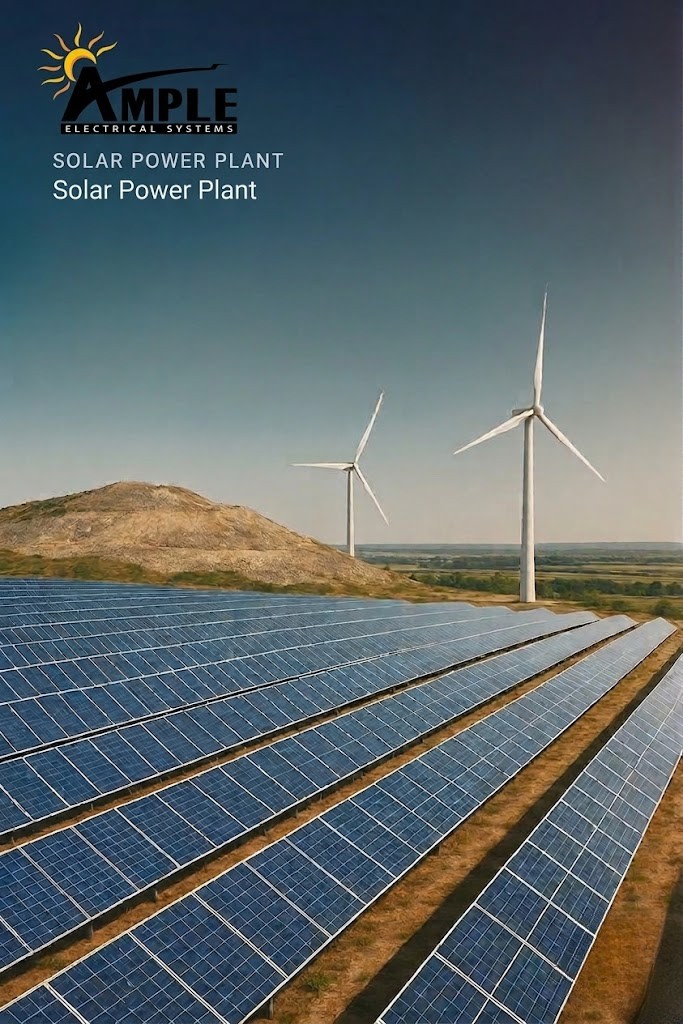
Solar Plant Installation: A Complete Guide to Clean and Cost-Effective Energy
Introduction
ampleelectricals With rising electricity costs and increasing awareness about environmental sustainability, solar plants have become one of the most practical energy solutions for homes, businesses, and industries. A solar plant converts sunlight into electricity using advanced solar panels and related equipment. It provides a reliable source of renewable energy while helping reduce dependence on conventional power sources.
Investing in a solar plant is not only beneficial for lowering electricity bills but also contributes to a cleaner and greener future. Whether installed on rooftops or large-scale commercial sites, solar systems offer long-term value and energy efficiency.
Key Features
| Feature | Description |
|---|---|
| Renewable Energy Source | Generates electricity from sunlight |
| Cost Savings | Reduces monthly electricity expenses |
| Low Maintenance | Requires minimal servicing |
| Environment Friendly | Produces clean energy with no emissions |
| Long Lifespan | Operates efficiently for 20–25 years |
| Energy Independence | Reduces dependency on grid electricity |
Table of Contents
- What is a Solar Plant?
- How Does a Solar Plant Work?
- Types of Solar Plants
- Benefits of Installing a Solar Plant
- Factors Affecting Solar Plant Cost
- Installation Process
- Maintenance Requirements
- Frequently Asked Questions
- Conclusion
What is a Solar Plant?
A solar plant is a power generation system that captures sunlight and converts it into usable electricity. It consists of solar panels, inverters, mounting structures, wiring, and monitoring systems. Solar plants can be installed for residential, commercial, agricultural, and industrial purposes.
How Does a Solar Plant Work?
The working process of a solar plant is straightforward:
- Solar panels absorb sunlight.
- The panels generate direct current (DC) electricity.
- An inverter converts DC electricity into alternating current (AC).
- The generated electricity powers appliances and equipment.
- Excess energy can be stored or supplied to the electricity grid, depending on the system configuration.
Types of Solar Plants
On-Grid Solar Plant
This system is connected to the utility grid. It allows users to utilize solar energy while drawing electricity from the grid whenever required.
Off-Grid Solar Plant
An off-grid system operates independently and uses batteries for energy storage. It is suitable for locations with limited grid access.
Hybrid Solar Plant
Hybrid systems combine the benefits of both on-grid and off-grid configurations by integrating battery storage and grid connectivity.
Benefits of Installing a Solar Plant
Lower Electricity Bills
Solar energy helps reduce monthly power expenses by generating electricity from sunlight.
Sustainable Energy Solution
Solar plants utilize a renewable energy source, making them environmentally responsible.
Minimal Maintenance
Most solar systems require periodic cleaning and inspections to maintain performance.
Increased Property Value
Properties equipped with solar systems are often viewed as more energy-efficient and attractive.
Long-Term Investment
Solar plants provide reliable energy generation for many years, offering long-term financial benefits.
Factors Affecting Solar Plant Cost
Several factors influence the overall installation cost:
| Factor | Impact on Cost |
| System Capacity | Larger systems require more equipment |
| Panel Quality | Premium panels may have higher efficiency |
| Installation Location | Site conditions affect setup requirements |
| Inverter Type | Different inverter technologies vary in price |
| Battery Storage | Additional storage increases investment |
Solar Plant Installation Process
Site Assessment
A professional evaluation is conducted to determine sunlight availability, roof condition, and energy requirements.
System Design
Engineers design a customized solar solution based on energy consumption and available space.
Equipment Installation
Solar panels, mounting structures, inverters, and electrical components are installed.
Testing and Commissioning
The system is tested to ensure proper operation and safety compliance before activation.
Maintenance Requirements
Proper maintenance helps maximize system performance:
Regular panel cleaning
Inspection of electrical connections
Performance monitoring
Periodic inverter checks
Professional servicing when required
Frequently Asked Questions
How long does a solar plant last?
Most solar plants operate efficiently for 20 to 25 years or more with proper maintenance.
Can a solar plant work during cloudy weather?
Yes, solar panels can generate electricity during cloudy conditions, although output may be reduced.
Is maintenance expensive?
No, solar plants generally require minimal maintenance and low operating costs.
How much space is needed for installation?
Space requirements depend on system size and energy consumption needs.
Can excess electricity be exported to the grid?
Yes, on-grid systems can export surplus electricity where net metering policies are available.
Conclusion
A solar plant is a practical and sustainable solution for generating electricity while reducing energy costs. With multiple system options, low maintenance requirements, and long-term benefits, solar energy continues to be a preferred choice for residential and commercial users. Proper planning, quality equipment, and professional installation can help maximize the performance and return on investment of a solar power system.

A Solar Water Pump System is an energy-efficient solution that uses solar power to pump water for agricultural, residential, and commercial applications. It provides a reliable water supply without depending on grid electricity or diesel fuel. Designed for long-term performance, these systems require minimal maintenance and offer a cost-effective, eco-friendly solution for irrigation and water management.
Read more