
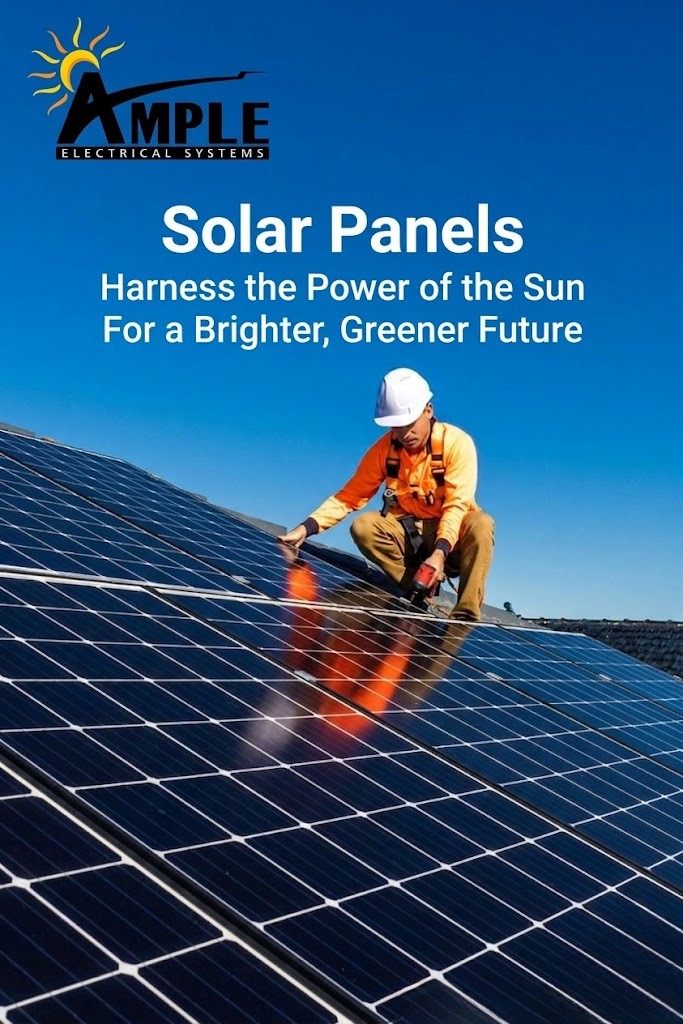
Solar Panels: A Smart Solution for Sustainable Energy
Introduction
As energy costs continue to rise, more homeowners and businesses are exploring alternative power solutions. Solar panels have emerged as one of the most reliable and environmentally friendly options for generating electricity. By converting sunlight into usable power, these systems help reduce dependence on traditional energy sources while offering long-term savings.
ampleelectricals Modern solar technology has become more efficient and accessible, making it easier for individuals and organizations to invest in clean energy solutions. Whether for residential, commercial, or industrial use, solar panels provide a practical way to meet energy needs while supporting environmental sustainability.
Key Features
| Feature | Description |
|---|---|
| Renewable Energy | Uses sunlight to generate electricity |
| Cost Savings | Helps lower electricity expenses |
| Eco-Friendly | Produces clean energy with minimal emissions |
| Long Lifespan | Can operate efficiently for decades |
| Low Maintenance | Requires only periodic cleaning and inspections |
| Energy Independence | Reduces reliance on conventional power sources |
Table of Contents
- What Are Solar Panels?
- How Solar Panels Work
- Different Types of Solar Panels
- Benefits of Solar Panels
- Installation Process
- Maintenance Tips
- Factors to Consider Before Buying
- Frequently Asked Questions
- Conclusion
What Are Solar Panels?
Solar panels are devices designed to capture sunlight and convert it into electricity. They consist of multiple photovoltaic (PV) cells that generate electrical energy when exposed to sunlight. These panels are commonly installed on rooftops, commercial buildings, and solar farms to produce renewable energy.
How Solar Panels Work
The process of generating electricity through solar panels involves several steps:
- Sunlight reaches the photovoltaic cells.
- The cells absorb solar energy and generate direct current (DC).
- An inverter converts DC power into alternating current (AC).
- Electricity powers appliances and equipment.
- Excess energy may be stored or supplied to the utility grid, depending on the system setup.
Different Types of Solar Panels
Monocrystalline Panels
These panels are known for their high efficiency and sleek appearance. They perform well in limited space and are commonly used in residential installations.
Polycrystalline Panels
Polycrystalline panels are generally more affordable and offer reliable performance for various applications.
Thin-Film Panels
These lightweight panels are flexible and suitable for specific commercial and industrial projects where traditional panels may not be ideal.
Benefits of Solar Panels
Reduced Energy Costs
Generating electricity from sunlight can significantly lower monthly utility bills.
Environmentally Responsible Choice
Solar power helps reduce carbon emissions and supports cleaner energy production.
Long-Term Value
A properly installed system can provide reliable energy generation for many years.
Low Operating Costs
Once installed, ongoing expenses are relatively low compared to conventional energy systems.
Increased Property Appeal
Energy-efficient properties are often considered more attractive to buyers and investors.
Installation Process
Site Evaluation
Professionals assess the location, available sunlight, and energy requirements before designing the system.
System Design
A customized plan is created based on energy consumption and installation space.
Equipment Setup
Solar panels, mounting structures, wiring, and inverters are installed according to safety standards.
Testing and Activation
The system undergoes testing to ensure proper performance before it becomes operational.
Maintenance Tips
Maintaining solar panels is generally simple:
Clean panels regularly to remove dust and debris.
Monitor energy production for any unusual changes.
Inspect electrical connections periodically.
Schedule professional inspections when necessary.
Keep the surrounding areas free from shading obstacles.
Factors to Consider Before Buying
| Factor | Why It Matters |
| Energy Consumption | Determines system size requirements |
| Roof Condition | Affects installation feasibility |
| Panel Efficiency | Impacts overall energy production |
| Warranty Coverage | Provides long-term protection |
| Budget | Influences panel and equipment selection |
Frequently Asked Questions
How long do solar panels last?
Most high-quality solar panels can last 25 years or more with proper maintenance.
Do solar panels work during cloudy weather?
Yes, they can still generate electricity, although output may be lower than on sunny days.
Are solar panels difficult to maintain?
No, regular cleaning and occasional inspections are usually sufficient.
Can solar panels increase property value?
Energy-efficient upgrades can make properties more attractive to potential buyers.
Is solar energy suitable for businesses?
Yes, many businesses use solar systems to reduce operational energy costs and improve sustainability efforts.
Conclusion
Solar panels offer a practical and sustainable approach to electricity generation. Their ability to reduce energy costs, support environmental goals, and provide long-term value makes them an excellent investment for homes and businesses alike. With proper planning, installation, and maintenance, a solar energy system can deliver reliable performance for years while contributing to a cleaner future.

A Solar Water Pump System is an energy-efficient solution that uses solar power to pump water for agricultural, residential, and commercial applications. It provides a reliable water supply without depending on grid electricity or diesel fuel. Designed for long-term performance, these systems require minimal maintenance and offer a cost-effective, eco-friendly solution for irrigation and water management.
Read more